Kerala Mural Tradition
Hand-painted Kerala murals on canvas.
Kerala mural paintings rooted in temple tradition
About the Artist
Classical technique, contemporary canvas.
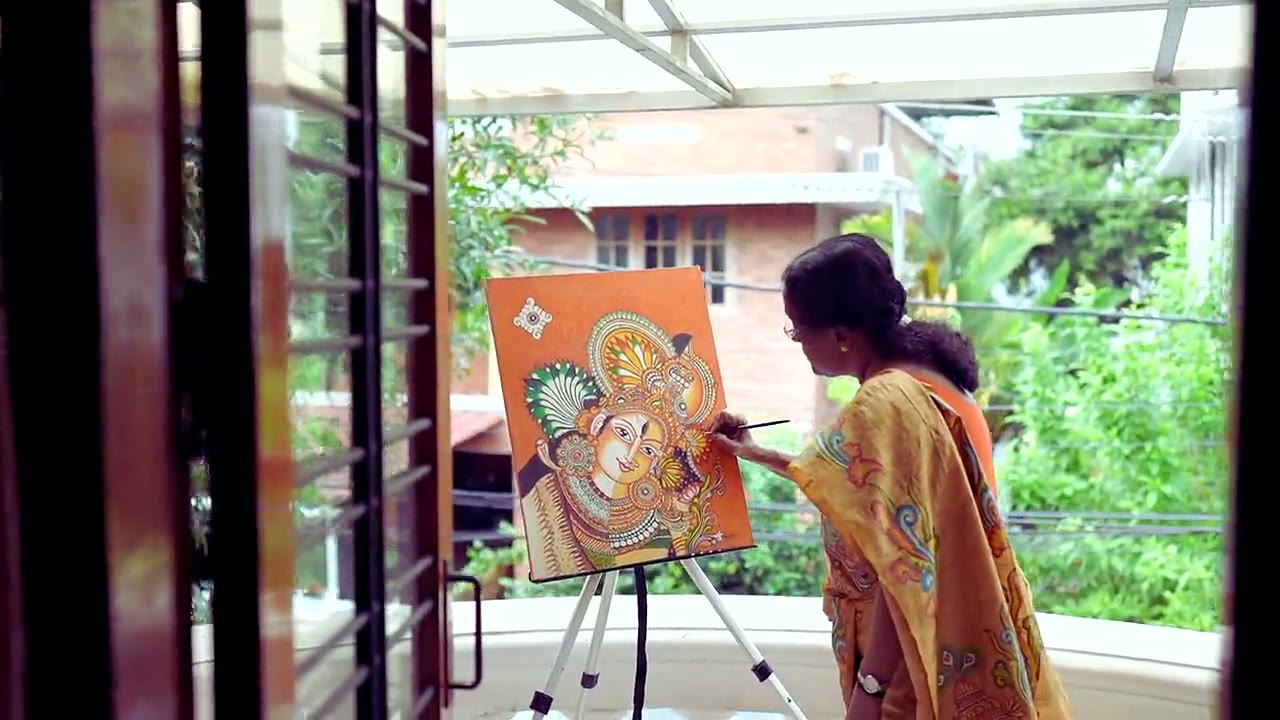
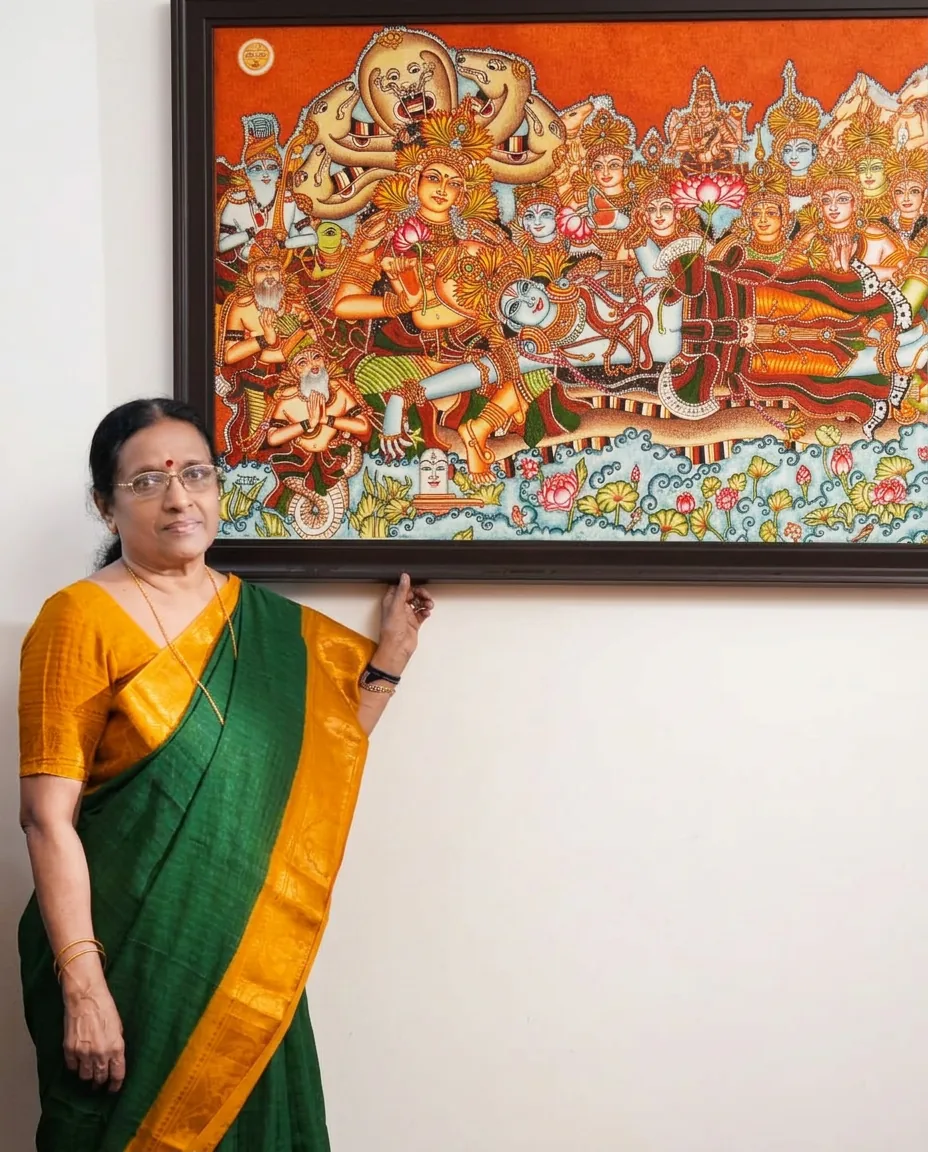
Dr. Manju P is a Kerala mural artist based in Trivandrum. Her work follows the classical tradition — the disciplined line, the five-colour earth palette, and the stippled detailing found on Kerala's temple walls.
She paints Hindu mythology, spiritual narratives and Kerala cultural themes on canvas, balancing tradition with a direct, personal hand.
Every piece is made slowly and by hand, without stencils or tracing, in a home studio.
- 20+
- Years painting
- Classical
- Mural training
- Kerala
- Studio based
The Tradition
What is Kerala mural painting?
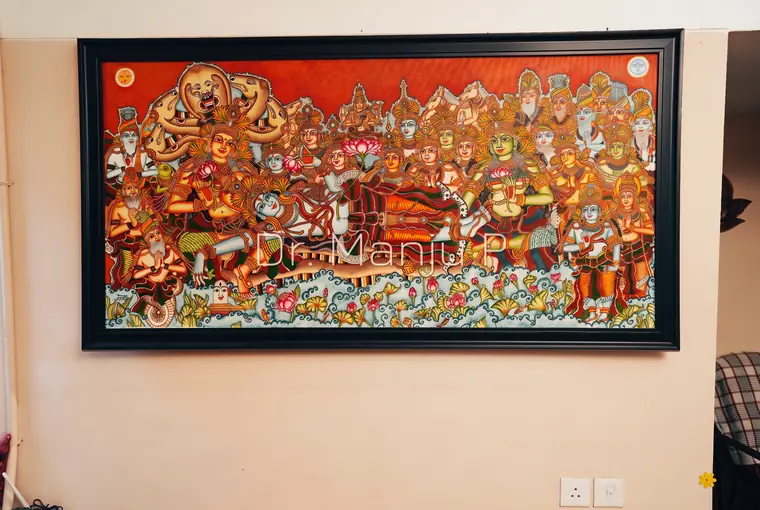
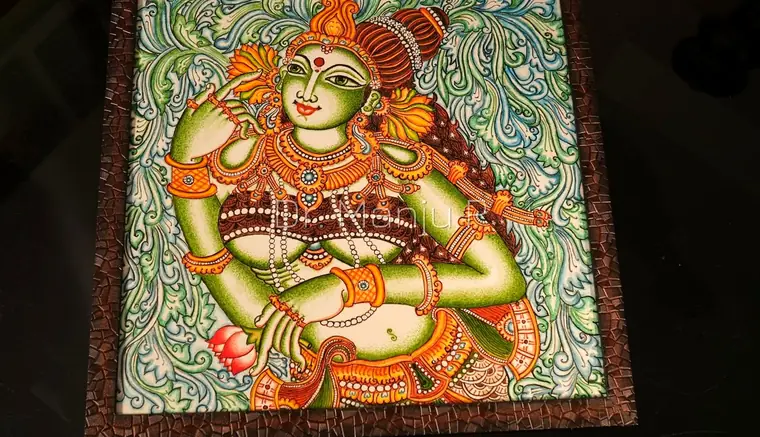
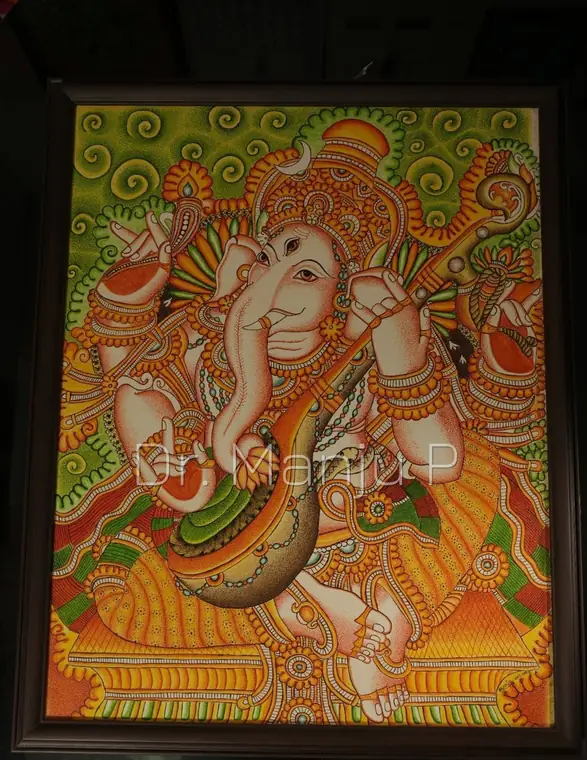
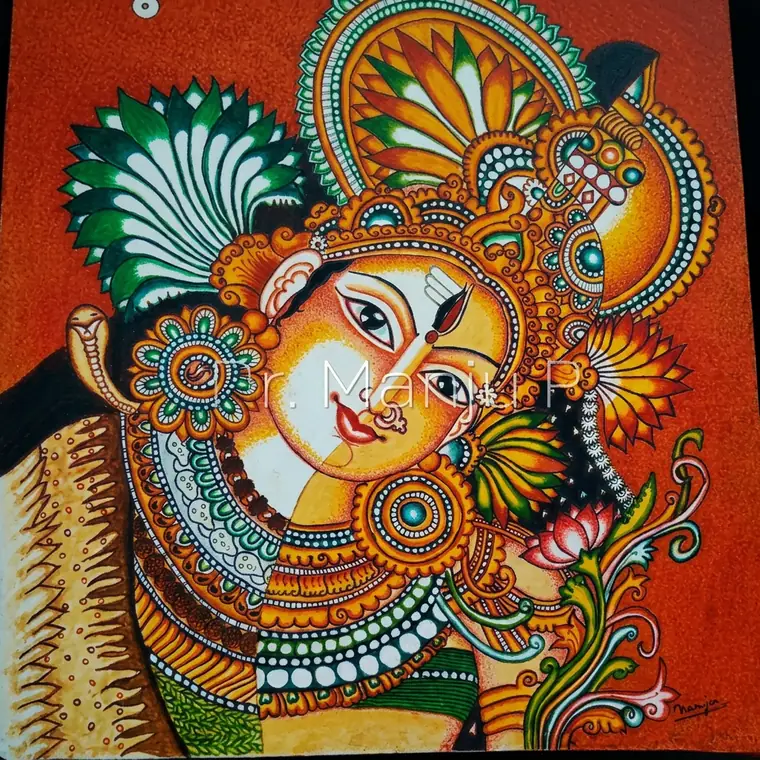
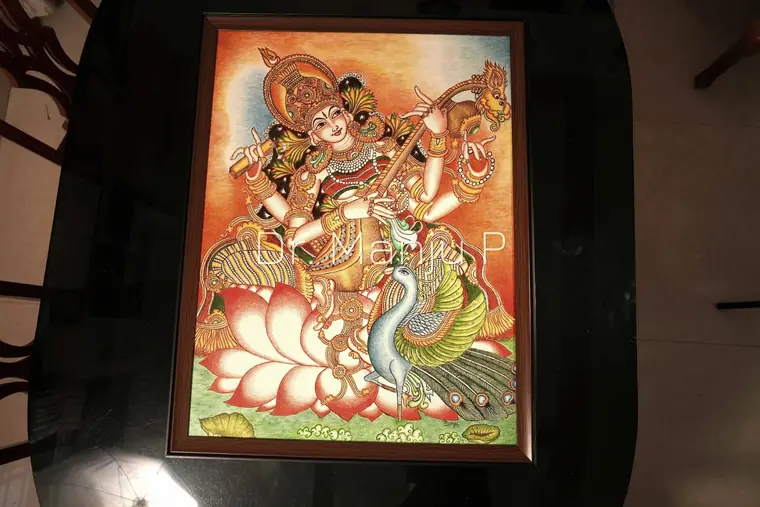
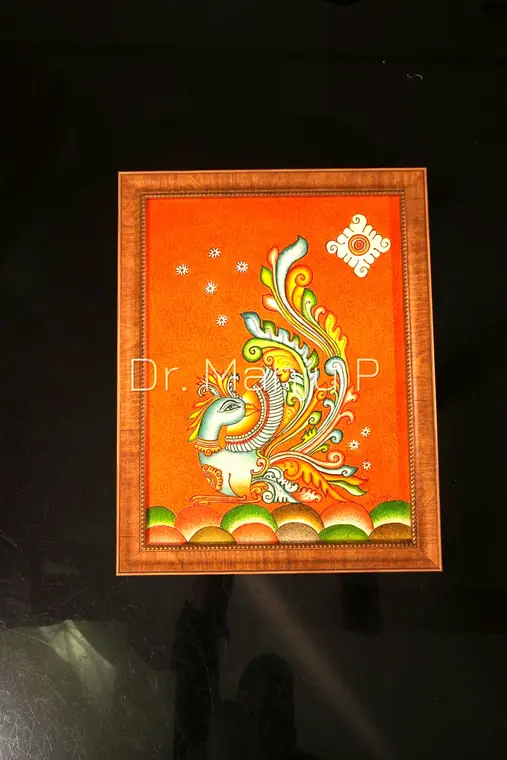
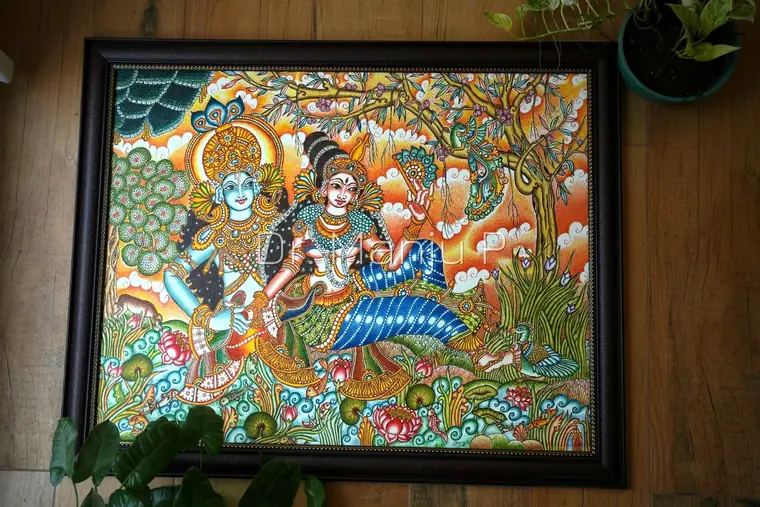
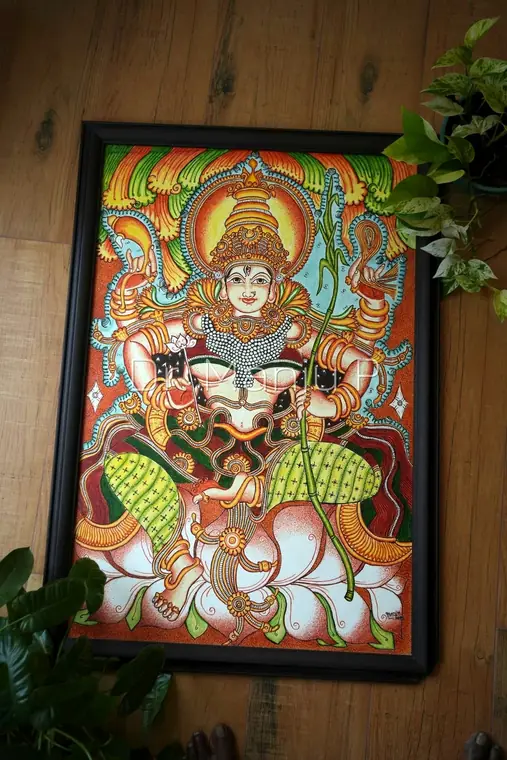
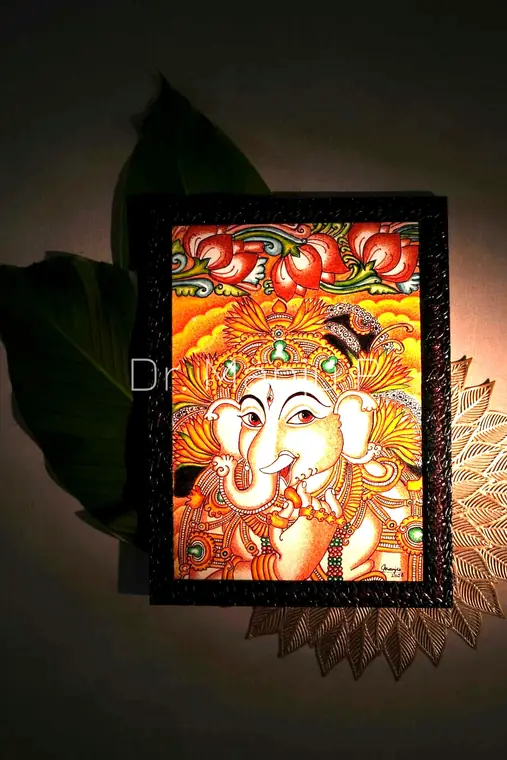
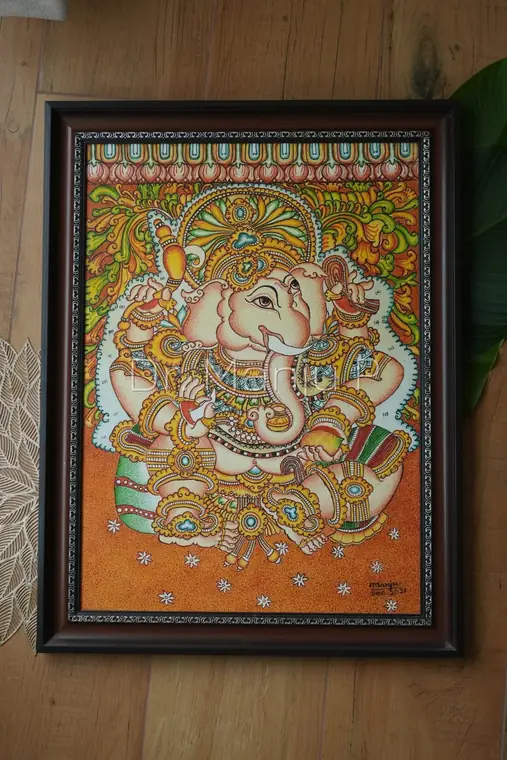
Kerala mural painting is a temple wall art tradition of south India, seen on the walls of Kerala's temples, churches and palaces from around the 9th century onwards. Its subjects are drawn from the epics and the puranas — Vishnu reclining on Ananta, Krishna with his flute, Shiva as Ardhanareeswaran, Ganesha, Devi and Dharma Sastha — each figure set against a dense ground of creeper, lotus and scalloped cloud.
The style is recognised by its disciplined outline, its elongated lotus eye, its ornamented crowns, and the way form is modelled in stipple rather than shading.
The five natural pigments
Classical Kerala mural art uses the panchavarna, five colours ground from the earth: red and yellow ochre from mineral stone, indigo blue from the neelamari plant, leaf green from eravikkara, and white from burnt lime shell, with lamp black for the line. The binder is the gum of the neem tree and coconut water; the brushes are made from grass roots and cow hair.
The technique
Work proceeds in a fixed order — the ground is prepared and burnished, the composition drawn freehand in yellow ochre, then outlined, then filled with flat colour, then modelled dot by dot with a single-hair brush, and finally sealed. Nothing is stencilled or traced. On canvas the same sequence is kept, which is why a mural painting on canvas can take from four weeks to several months.
Selected Works
Recent paintings
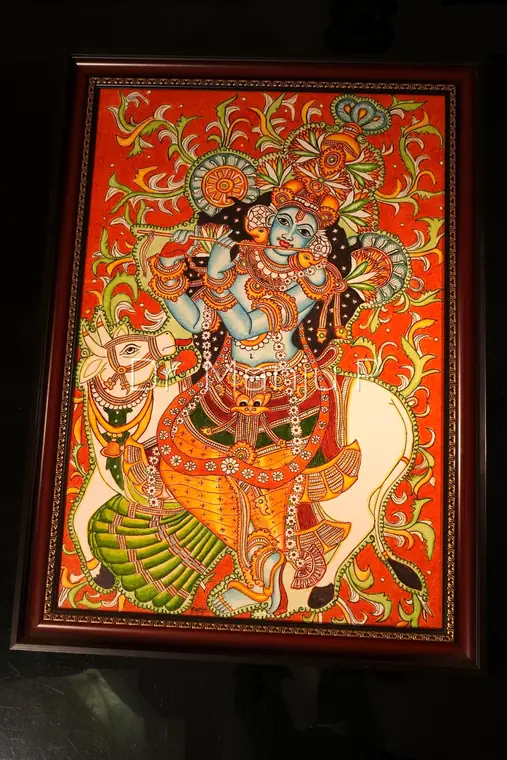
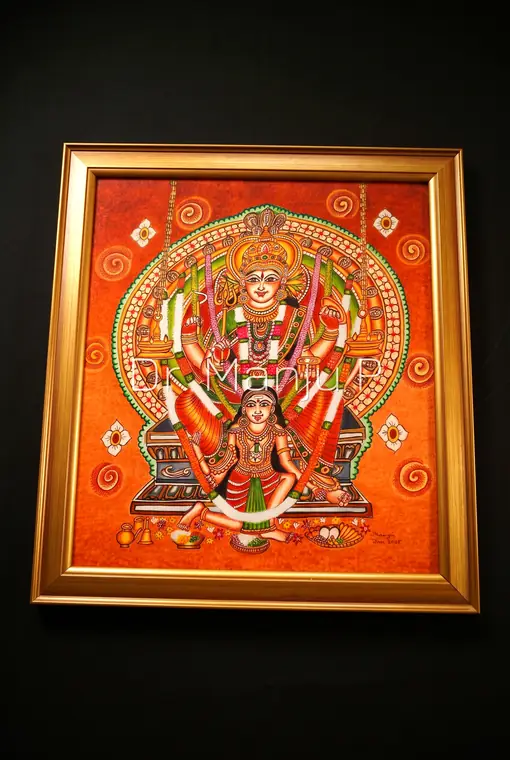
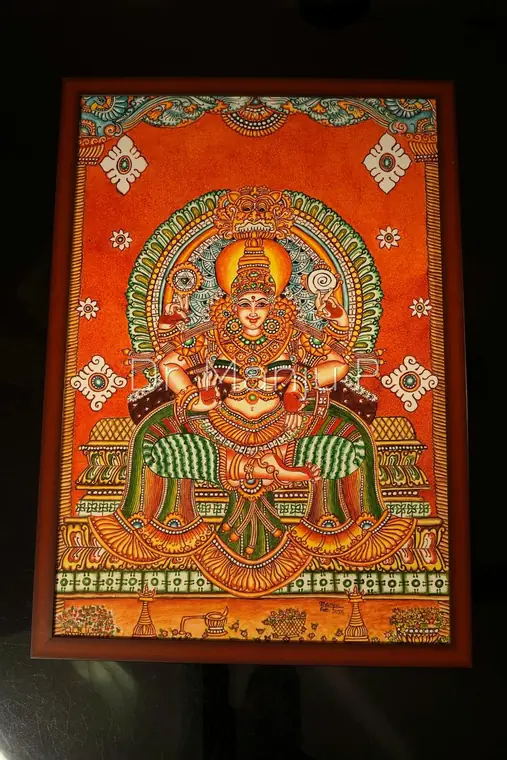
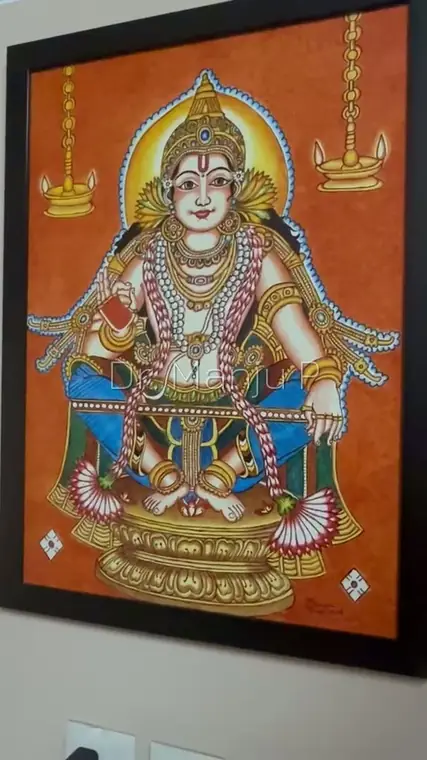
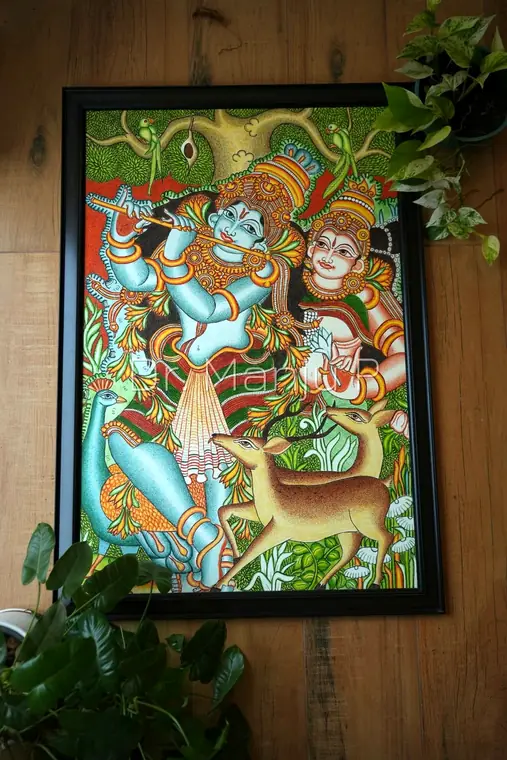
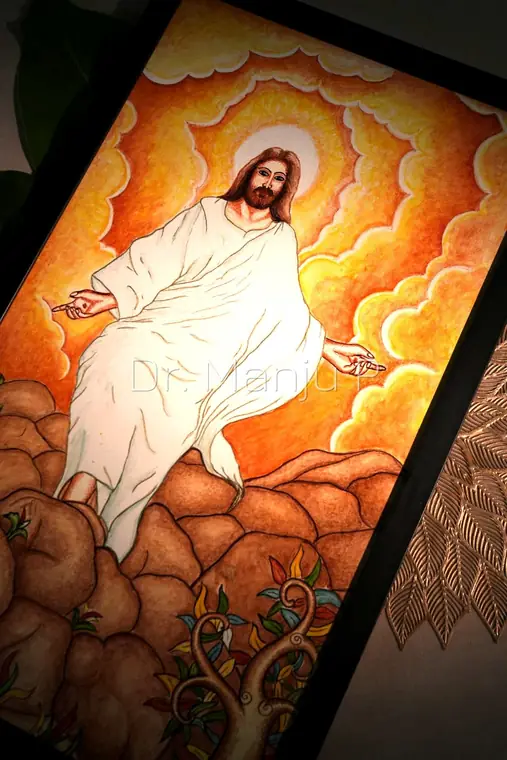
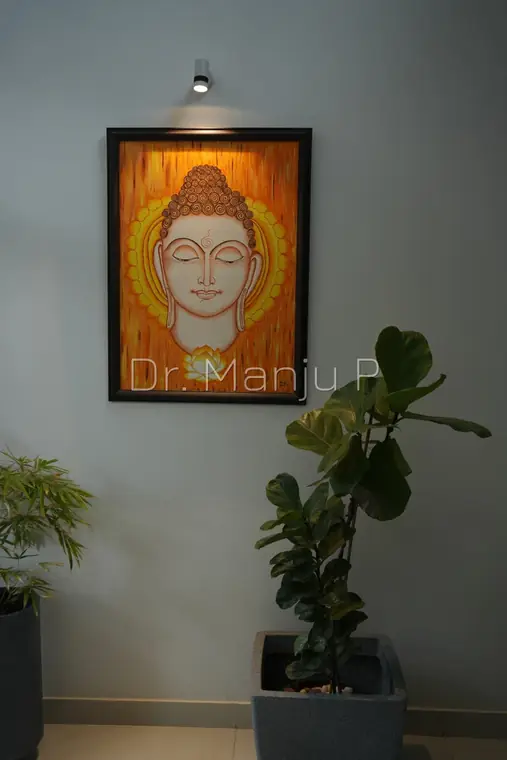
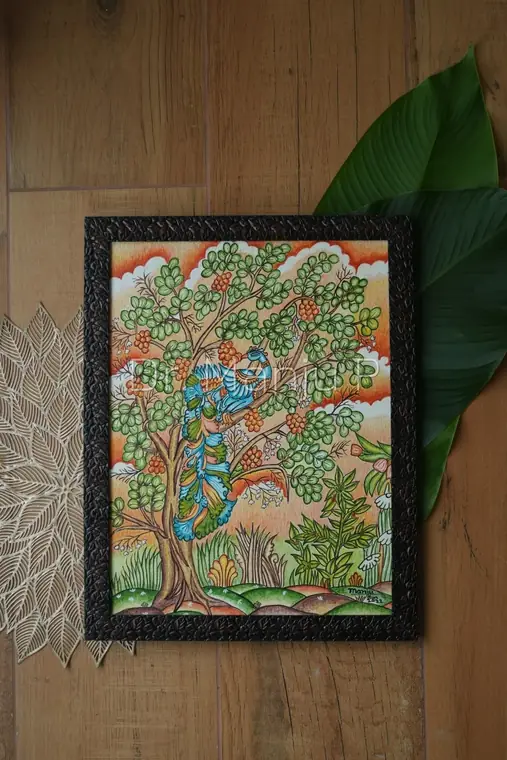
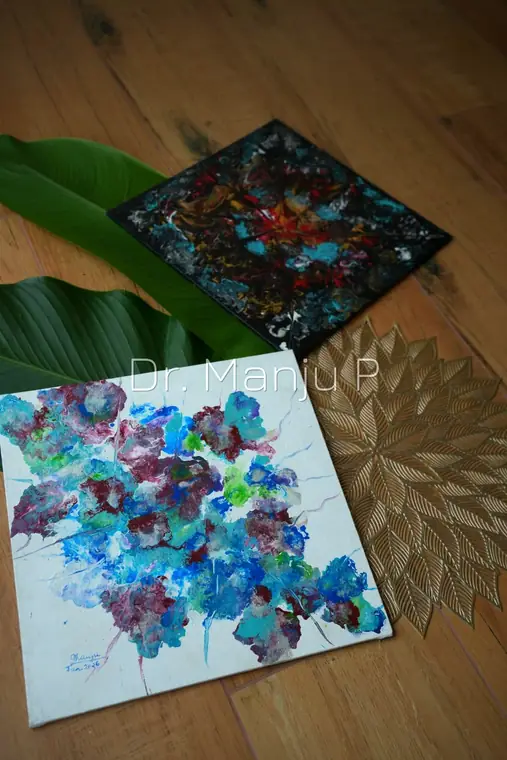
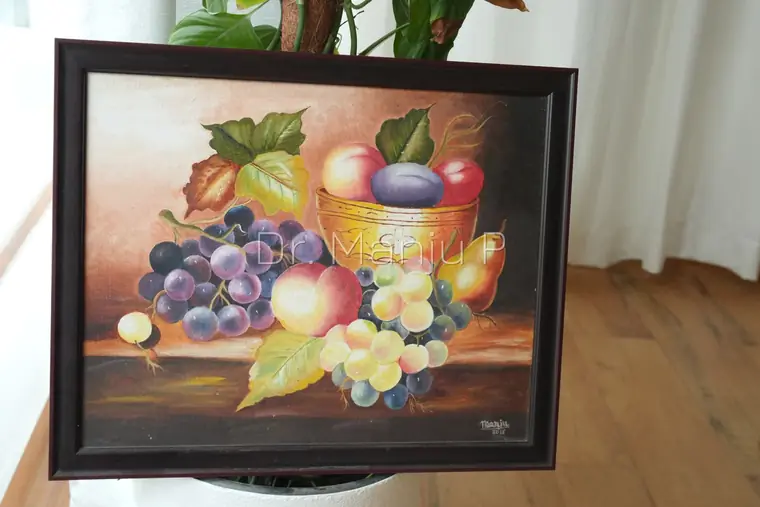
The Process
From sketch to finished painting
- 01
Concept & Story
The subject is chosen first — a deity, myth or personal story. The meaning is fixed before any line is drawn.
- 02
Sketch
The composition is drawn freehand in classical proportions, figure by figure, directly onto the prepared surface.
- 03
Layering Colours
Flat colour fields are laid first, then modelled dot by dot with the stippling technique used in temple murals.
- 04
Intricate Detailing
Ornaments, textures, floral motifs and facial expressions are rendered with a single-hair brush over many weeks.
- 05
Completed Artwork
The painting is sealed, framed in wood and signed — a finished piece ready for a wall.
In Their Words
What collectors and curators say
“The mural we commissioned became the heart of our home. Guests stand in front of it for ten minutes before they say anything.”
“What struck me was the discipline of the line work. This is a painter who has genuinely studied the tradition, not borrowed its surface.”
“Her demonstration taught us more about pigment layering in two hours than a semester of reading did.”
“A serene, meticulous body of work. The panoramic Anantasayanam drew the largest crowd of our festival.”
Commission a Painting
Commission a Kerala mural
Deity panels, family portraits, wedding gifts and wall-scale narratives — painted to your story, your space and your measurements.